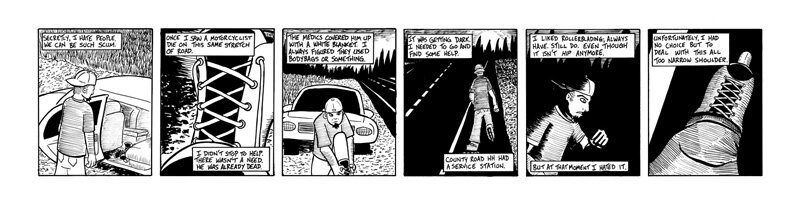
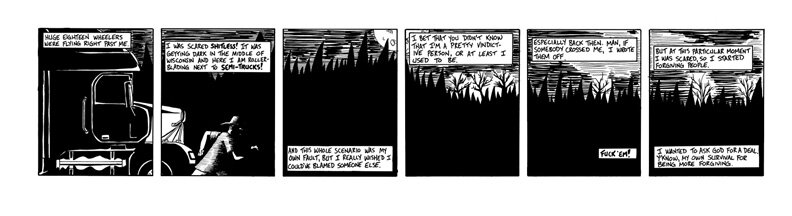
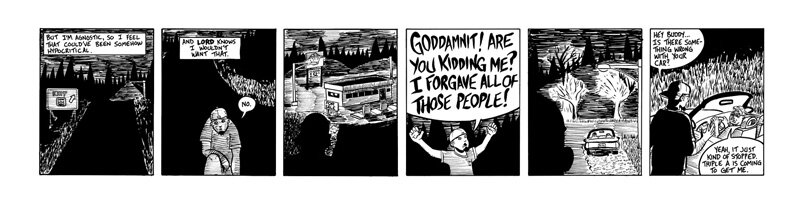
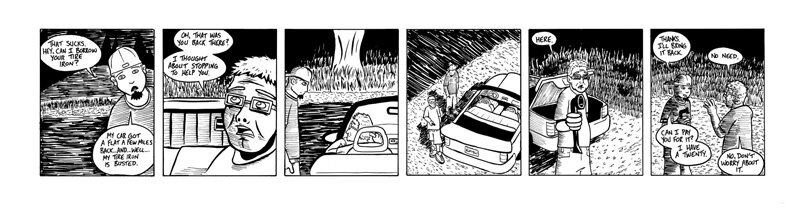
Hey folks, 24 Hour Comic Day is nearly upon us and I’d like to give you a quick glimpse into what I’ve experienced. These aren’t necessarily the end-all-be-all of tips or tricks. If you’d like those, head over to the Minneapolis 24 Hour Comic Blog and take a look at Kevin Cannon’s bible on how to survive this marathon.
Since 2007, I’ve completed eight 24 Hour Comics. Each event has taught me something, but that first book, Origin of Man the Ladybug really was a trial-by-fire that gave me a good foundation of personal dos and don’ts of 24 Hour Comics.
KNOW YOUR MATERIALS
I make sure to have my materials ready before the big day-night-day. I would suggest to pick out the pens, pencils, brushes, and paper that you plan on working with. Most of the tools I’ve used since my second comic are pretty standard: Mechanical pencil w/ 0.5 mm lead, Pigma Micron markers in sizes 1, .08, .05, and .02, an old Pentel pocket brush pen for fills, Staedtler Mars Plastic eraser, Pentel Presto White Out pen 12ml, and 11″ x 17″ graph paper divided into four 5.5″ x 8.5″ sections.
PRE-RULING PAGES
Yes, I pre-rule my pages prior to the event. I know this doesn’t necessarily fit within the guidelines of the 24 Hour Comic, but it does help me layout what I am going to do. I don’t plan on the size and shape the panels in advance, instead I take a 11″ x 17″ sheet of graph paper and divide it into four separate 5.5″ x 8.5″ sections. It saves on the cost of paper and amount you will have to carry around.
Also, by pre-ruling I am able to figure out how to collate my pages in advance. This helps later when I produce print comics.
DON’T LOSE ANY SLEEP IF YOU ALREADY HAVE AN IDEA
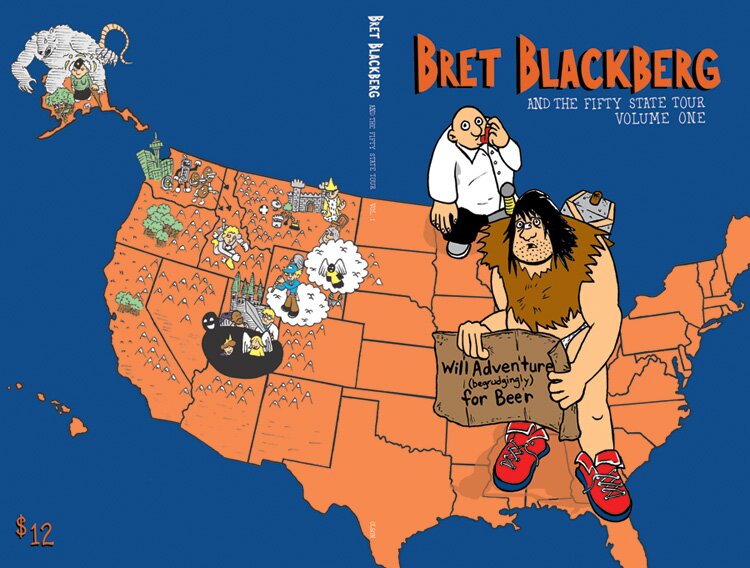
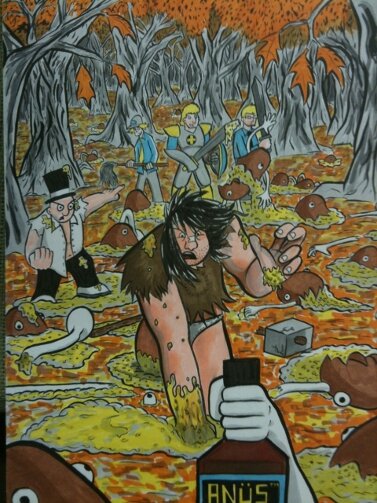
Before the 2008 24HCD, I stayed up pretty much all night worrying that I was “cheating,” because I had a vague idea of what I wanted to do. This led me to a very long 24HCD…I was VERY tired by the end and slept until the following Monday. I ended up using the vague idea and since then I’ve expanded on it, creating the Bret Blackberg series of 24 Hour Comics.
Maybe this is “cheating”, I’m not sure. Comics guru Scott McCloud stated, in so many words, that by accepting the challenge you should come into the exercise with a clean slate. However, I cannot do ANYTHING with a clean slate. I always have ideas bouncing from one synapse to the other! So, I’ve relaxed. I don’t plan out my comics intricately at all (as you can probably see from the comics if you’ve read them), however I do know a few key points going into each Blackberg book.
1) Who the recurring characters are.
2) Where the previous chapters left off.
3) What state that book is taking place in (each of the Blackberg books primarily takes place in one of the fifty United States)
WORK SMALL
In 2007, I used 9″ x 12″ bristol for each page, much to my own chagrin. I had way too much room to play with, which led to a lot of dead space. It helps me to work at a smaller size, because I am less tempted to fill that extra space with ornate designs. Now, I’m not saying that art should be boring, but it really helps to simplify the panels. Believe me, your hand will thank you later.
PACE YOURSELF AND DON’T BE TOO CHATTY
After my first two 24 Hour Comics, I decided that I would try to write the story first, pencil it, and then ink. My reasoning? I would much rather have a somewhat cohesive story than drop-dead gorgeous artwork. True, this lends itself to not being able to budget time by finishing approximately a page an hour, but it seems to work well for me.
I spend the first six to ten hours of the event writing and penciling my pages (they tend to happen simultaneously) without any distractions. I put on my headphones and pretty much ignore people. Sorry, but I want to get done! Then, I loosen up, get something to eat, take a small break, check out people’s work without trying to bother them, and then get to inking. I ink the more detailed pages and panels first. Rather than seeing the progression of art getting worse and worse as the story unfolds, the reader should see some nice pages and panels throughout the book, while some of the less attractive panels are hidden. I tend to believe that inking the 24 Hour comic as a portion of the process that doesn’t require as much thinking. I generally flesh out my pencils well enough to the point where it is just “tracing” anyhow.
DOCUMENT YOUR PROGRESS
This isn’t necessarily essential, but I like to keep track of where I am in regards to previous 24 Hour Comics. It’s true that I haven’t done a full 24 hours since my first two books, but that doesn’t mean I haven’t completed 24 pages! In fact, it generally takes me anywhere between 16 to 18 hours to finish now. I owe this all to doing multiple 24 Hour Comics and documenting my progress. I document, for the most part, mentally (for example I know where I need to be in terms of writing/pencilling to get the comic done by X-o’clock), but I also throw some progress reports up on Twitter under the hashtag #24×50. The next day I look back on notes I’ve made and have started documenting them in a tablet (unfortunately, I only have rough ideas or where I was at for the first few books.)
TAKE CARE OF YOURSELF
After my first 24 Hour Comic, my hand started cramping up and I needed to finish the book at home. Yes, it’s sad, but I did it within 24 hours (just not 24 consecutive hours.) This I blame on lack of hydration, potassium, and hand exercises. My advice? If your hand starts to hurt, or if you start to just feel ill, STOP DOING YOUR COMIC! Really, it’s not worth it. Your health is the most important thing you have and injuring yourself over a crudely created comic isn’t very smart. You can always exercise, take a break, or just quit if you can’t bare it.
Okay, that’s all I have. I might be missing a few things here or there, but I feel I got my gist across. If you have any other questions regarding 24 Hour Comics, feel free to ask in the comments section below. I will answer them as soon as I can!
Oh yeah, if you want to read my previous 24 Hour Comics click on the links below:
October 2007: The Origin of Man the Ladybug
Bret Blackberg and the Fifty State Tour
October 2008: Chapter One - Somewhere in Montana
October 2009: Chapter Two - Meanwhile in Wyoming
October 2010: Chapter Three - Elsewhere in Utah
February 2011: Chapter Four - Subsequently in Idaho
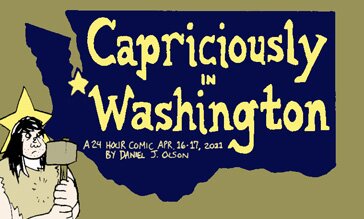
April 2011: Chapter Five - Capriciously in Washington
June 2011: Chapter Six - Somehow in Alaska
August 2011: Chapter Seven - Also in Hawaii